Looking for the best
diabetic retinopathy treatment
in Noida?
Tirupati Eye Centre offers advanced retina screening, laser treatment, injections, and surgery for diabetes-related eye diseases.



Dr Mohita Sharma is an international authority in the field of retina. She has extensive experience in the field of diabetic retinal disease, and is invited as faculty in national and international conferences to share her knowledge and experience.
She has been the principal investigator in global and national clinical trials related to diabetic retinopathy.
India’s one of the largest eye hospitals.
Experienced retina specialists and eye surgeons of international acclaim in the field of retina and retinal diseases.
Advanced retinal imaging and state-of-the-art eye testing technology.
Early diabetic retinopathy screening programs.
Convenient location in Noida.
Trusted eye hospital serving not just surrounding areas but also the whole of India for retinal diseases.
Site for global multicentric clinical trials which is globally acclaimed for its surgical expertise and latest equipment.

Diabetic retinopathy is a complication of diabetes that affects the blood vessels of the retina, the light-sensitive layer at the back of the eye. High blood sugar damages these vessels, leading to leakage, bleeding, swelling, and sometimes permanent vision loss, if not treated in time as the retinal cells get damaged permanently. It is one of the leading causes of preventable blindness in adults.
Nearly 1 in 4 people with diabetes may develop some form of diabetic retinopathy.
Early diabetic retinopathy may not cause any symptoms. There may be a diabetic retinal disease present with normal vision in initial stages. As the disease progresses, patients may experience:
Special investigations are systematically carried out to detect and monitor the progressionSpecial investigations are carried out to detect diabetic retinopathy.
These include retina examination, photography of retina called fundus photo, OCT of retinal to detect any swelling within the layers of retina and fundus fluorescein angiography (FFA) to detect any areas of leakage due to new blood vessels or swelling.
At Tirupati eye Centre, the best of equipment is available for diagnosis of diabetic retinal diseases. Surgeons have an expertise to diagnose the disease and recommend the best possible treatment.
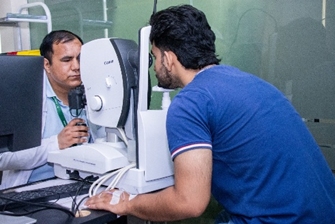
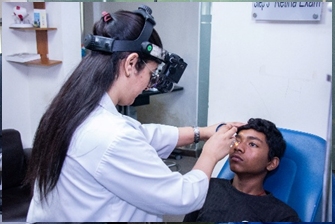
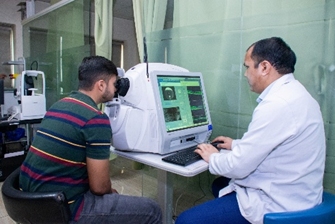
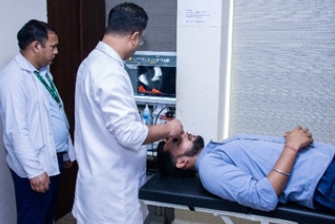
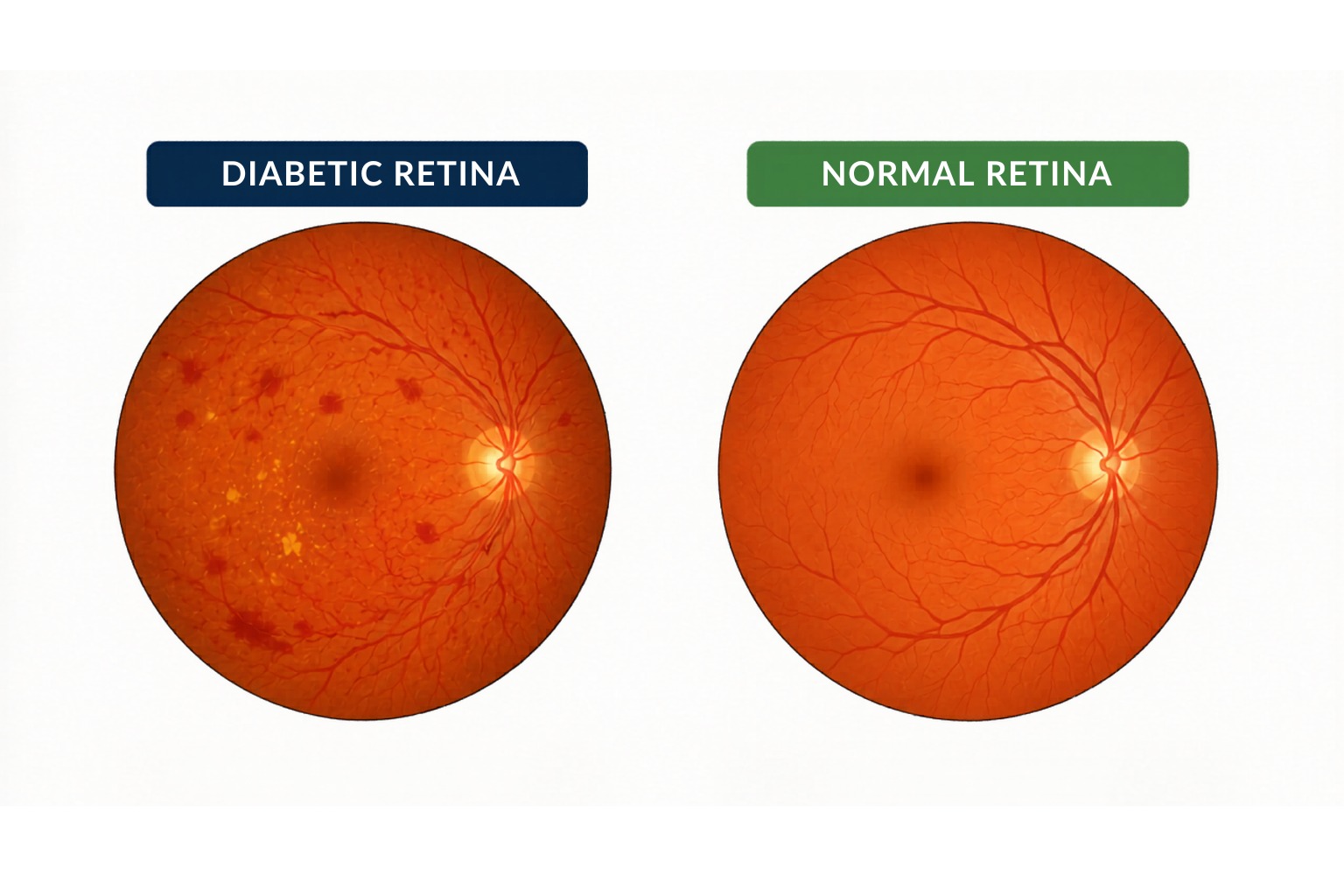
Retina may show areas of bleeding called haemorrhages or swelling called edema in early stages which are called background retinopathy and preproliferative retinopathy.
In later stages there may be abnormal small blood vessels called neovascularization (which can bleed suddenly) causing massive bleeding in the eye and complete or partial loss of vision.
In advanced stages, the retina can move from its position called retinal detachment which can again cause blindness.
Treatment depends on the stage of disease. No treatment can improve vision. Treatment for diabetic retinal diseases is meant to stabilize vision and stop further deterioration of vision which can happen with treatment in 95% cases, if the control of blood sugar and other systemic factors like blood sugar and lipid profile are also controlled.
The foundation of treatment includes: good diabetes control, blood pressure control, cholesterol management and healthy lifestyle.
Laser helps reduce leakage and prevent progression in many patients.
These are given inside the eye and are called intravitreal injections. Multiple injections are generally needed at around monthly intervals to control the disease. Commonly used injections are anti VEGFs called Ranibizumab, Aflibercept, Bevacizumab, Brolucizumab, and Faricimab.
Advanced cases with bleeding or retinal detachment may require retinal surgery.
1. Can diabetes affect eyesight permanently?
Ans: Yes. Diabetes can damage the retina and may lead to permanent vision loss
if not diagnosed and treated early.The resulting blindness can be partial or total.
This damage is related to the control of diabetes as well as duration. If
uncontrolled or poorly controlled, diabetes can result in blinding retinopathy. Even
if diabetes remains controlled, after 5 years of diabetes there can be damage to the
retina.
2. Does every diabetic patient need a retina checkup?
Ans: Yes. Even if vision is normal, diabetic patients should undergo regular
retina examinations because diabetic retinopathy often develops silently in the
early stages, and the damage it causes is irreversible.
3. How do I know if diabetes has affected my eyes?
Ans: Common warning signs include blurred vision, floaters, difficulty reading,
fluctuating vision, and dark spots. However, many patients may not notice symptoms
initially.
4. Is diabetic retinopathy curable?
Ans: Diabetic retinopathy can be managed and controlled effectively with timely
treatment, regular follow-ups, and proper diabetes control. Treatment is available
in the form of intravitreal injections, lasers and surgery, however early
intervention is advisable because vision once lost cannot be reversed; it can only
be stabilized at that level.
5. What is the best treatment for diabetic retinopathy?
Ans: The treatment depends on the stage of the disease. Options may include
retina laser treatment, eye injections, or vitrectomy surgery. The surgeon decides
which treatment is best for each eye based on the stage of retinopathy.
6. Are retina injections safe?
Ans: Yes. Retina injections are commonly performed procedures used worldwide
for diabetic retinal swelling and abnormal blood vessel growth. They are the
standard of care for diabetic retinopathy and are overall very safe for the eye.
7. Is diabetic retinopathy treatment painful?
Ans: Most retina treatments, including laser and injections, are minimally
uncomfortable and are usually performed as daycare procedures. In these procedures,
anaesthesia is given in the form of eye drops which numb the eyes and prevent pain.
8. How long does diabetic retinopathy treatment take?
Ans: The procedures in the form of intravitreal injections and lasers take only
a few minutes, while complete treatment may require multiple visits depending on the
severity of the condition. If retinopathy has set in, regular treatment and follow
up are necessary to protect the vision.
9. Can vision improve after diabetic retinopathy treatment?
Ans: Many patients experience stabilization of vision and very few patients may
have improvement in vision when treatment is started at the right time.
10. What happens if diabetic retinopathy is left untreated?
Ans: Untreated diabetic retinopathy is a progressive condition and can lead to
retinal bleeding, retinal detachment, severe vision loss, or blindness.
11. Can diabetic retinopathy occur even if diabetes is controlled?
Ans: Yes. Even well-controlled diabetic patients can develop retinal changes
over time, which is why regular eye examinations remain important. The changes apart
from being related to control, also depend on the duration of diabetes. After 5
years of history of diabetes, there is a chance of developing retinopathy.
12. How often should diabetic patients get retina checkups?
Ans: Most diabetic patients should have a yearly retina examination. Patients
with existing retinal damage may need more frequent monitoring. In general after 5
years of diabetes it is mandatory to get a retina checkup every day. For young
diabetics, a retina examination should start as soon as the diagnosis is made and
should be carried out at least once a year.
13. Is diabetic retinopathy common in India?
Ans: Yes. Due to the increasing number of diabetic patients in India, diabetic
retinopathy has become one of the leading causes of preventable blindness.
14. Why choose Tirupati Eye Centre for diabetic retinopathy treatment in
Noida?
Ans: Tirupati Eye Centre offers advanced retina diagnostics, modern treatment
options, experienced eye specialists, and comprehensive diabetic eye care. Tirupati
Eye Centre has a super specialized "Retina Sciences Clinic" where advanced treatment
for diabetic retinopathy is performed. The treatment done is as per standard of
care, with state of art equipment and world renowned retina specialists. This is one
of the best retina clinics in India, and Tirupati Eye Centre is globally acclaimed
for retina treatment.
15. When should I immediately consult an eye specialist?
Ans: You should seek immediate medical attention if you are a diabetic and
experience sudden blurred vision, floaters, flashes, distorted vision, or sudden
vision loss.

I am very happy to see this eye hospital in Noida to do good work in all specialities of eye. The campaign on diabetic retinopathy is especially commendable.

Tirupati Eye Centre is a hospital known for its quality services for eye catering to all segments of society whether rich or poor. It provides latest technology for all types of eye diseases under one roof

An eye hospital in Noida with state of art facilities,comfortable atmosphere, disciplined, polite and knowledgable staff and expert doctors in whose hands patients feel safe

Hospital of repute where doctors give a personal touch and technology is most advanced making it a safe and trusted place for eye treatment. Noida is proud to have an eye institute of this capacity


C-53C, Sector-33,
Noida (Gautam Budh Nagar) - 201301
Uttar Pradesh (INDIA)
Shop No. CM FF 25,
AWHO, Gurjinder Vihar, Gr. Noida
Uttar Pradesh (INDIA)